Photography/social media feed back wanted

I love taking pictures! My memory is fading so I have my pictures to trigger a memory both good and bad. You can see them all on Instagram I feel like my pictures are gaining more popularity then my posts. I am trying to post more. I did 3 posts here today. YAY!! I have so much to talk about. I feel like I am not posting good content. In less than a month I’ve gained quite a following and I love and appreciate everyone of you but I feel like there is more I could be doing to make it better. I’ve put so much pressure on myself to post repeats everyday I even have a list of topics but I’m not living up to the potential and gift I have.

I know my mind is slowly going. We’ve done the test and proven it but I’m trying to push through it and make something out of it to either help improve my memory or a legacy when it goes completely. This is my gateway for my book. I love my book. It is my escape from reality.

This is a short post but I want your opinions. What are you thinking should I revamp this early in the game?

Instagram: Bipolaroutcasts

Facebook: Will it Reach you on time

🖤Day 13🖤 Favorite quotes

Today is favorite quotes. I think it said quote, but I don’t have just one so it will be quotes🖤

🖤 “After silence, that which comes nearest to expressing the inexpressible is music.” Aldous Huxley. -We all need silence to calm down or to focus, but when the silence is overwhelming music will soothe your soul. Over the years especially with my illness music ends up being my only refuge.

🖤 “But I don’t want comfort. I want God, I want poetry, I want real danger, I want freedom, I want goodness. I want sin.” – Aldous Huxley. This is actually on my blog page. I want a challenge in my life I don’t want to live comfortably. I want to step outside my boundaries and do something that will either cause me to fly or fall and I’m writing it right now. I am too creative and smart to lead a normal life. I was meant to do something extraordinary.

🖤“Coincidence is God’s way of remaining anonymous” – Albert Einstein

🖤 “Those who dream by night in the dusty recesses of their minds wake in the day to find that it was vanity: but the dreamers of the day are dangerous men, for they may act their dreams with open eyes, to make it possible.”~ T.E. Lawrence

🖤“Nobody can go back and start a new beginning, but anyone can start today and make a new ending.”-Maria Robinson

🖤 “Faith is taking the first step even when you don’t see the whole staircase.” ~Martin Luther King Jr.

🖤 “It’s the village girl who will change the world”. – Kelly Cutrone Don’t worry I’m finally on my way. I am coming out the gate running strong.

🖤“Reality is wrong. Dreams are for real.” – Tupac Shakur

🖤 “Everybody’s at war with different things…I’m at war with my own heart sometimes.” ― Tupac Shakur I feel this everyday. I am feel like I am always struggling with my heart and conscience everyday.

🖤 “You gotta be able to smile through the bullshit.” – Tupac Shakur

🖤 “Trust your own judgement, live with it and love it.” – Nas

Day 7 Schizophrenia

Each day I will detail an illness. Some of them you’ve heard of some you haven’t but the most important thing is we recognize some of them. One illness is greater than the other just some for more information.

Schizophrenia Overview

Schizophrenia symptoms include distorted thoughts, hallucinations, and feelings of fright and paranoia. Psychiatrists evaluate symptoms, tests, and medical history, and prescribe medications and psychotherapy for treatment.

TOP SEARCH TERMS FOR SCHIZOPHRENIA

Paranoid Schizophrenia

Schizoaffective Disorder

Tardive Dyskinesia

Schizophrenia Symptoms

Delusional Disorder

Psychosis

Schizophrenia Test

Schizophrenia Causes

Schizophrenia Medication

Psychotic Disorders

Brief Psychotic Disorder

Schizophreniform Disorder

Schizophrenia is a serious brain disorder that distorts the way a person thinks, acts, expresses emotions, perceives reality, and relates to others. People with schizophrenia — the most chronic and disabling of the major mental illnesses — often have problems functioning in society, at work, at school, and in relationships. Schizophrenia can leave its sufferer frightened and withdrawn. It is a life-long disease that cannot be cured but can be controlled with proper treatment.

Contrary to popular belief, schizophrenia is not a split or multiple personality. Schizophrenia is a psychosis, a type of mental illness in which a person cannot tell what is real from what is imagined. At times, people with psychotic disorders lose touch with reality. The world may seem like a jumble of confusing thoughts, images, and sounds. The behavior of people with schizophrenia may be very strange and even shocking. A sudden change in personality and behavior, which occurs when schizophrenia sufferers lose touch with reality, is called a psychotic episode.

Schizophrenia varies in severity from person to person. Some people have only one psychotic episode while others have many episodes during a lifetime but lead relatively normal lives between episodes. Still other individuals with this disorder may experience a decline in their functioning over time with little improvement between full blown psychotic episodes. Schizophrenia symptoms seem to worsen and improve in cycles known as relapses and remissions.

What Are the Symptoms of Schizophrenia?

People with schizophrenia may have a number of symptoms involving changes in functioning, thinking, perception, behavior, and personality, and they may display different kinds of behavior at different times.

It is a long term mental illness which usually shows its first signs in men in their late teens or early 20s, while in women, it tends to be in their early 20s and 30s. The period when symptoms first start to arise and before the onset of full psychosis is called the prodromal period. It can last days, weeks or even years. Sometime it can be difficult to recognize because there is usually no specific trigger. A prodrome is accompanied by what can be perceived as subtle behavioral changes, especially in teens. This includes a change in grades, social withdrawal, trouble concentrating, temper flares, or difficulty sleeping. The most common symptoms of schizophrenia can be grouped into several categories including positive symptoms, cognitive symptoms, and negative symptoms.

Positive Symptoms of Schizophrenia

In this case, the word positive does not mean “good.” Rather, it refers to symptoms added in to one’s experience that are exaggerated and irrational forms of thinking or behavior. These symptoms are not based in reality and are sometimes referred to as psychotic symptoms, such as:

• Delusions: Delusions are strange beliefs that are not based in reality and that the person refuses to give up, even when presented with factual information. For example, the person suffering from delusions may believe that people can hear his or her thoughts, that he or she is God or the devil, or that people are putting thoughts into his or her head or plotting against them.

• Hallucinations: These involve perceiving sensations that aren’t real. Hearing voices is the most common hallucination in people with schizophrenia. The voices may comment on the person’s behavior, insult the person, or give commands. Other types of hallucinations are rare such as seeing things that aren’t there, smelling strange odors, having a “funny” taste in your mouth, and feeling sensations on your skin even though nothing is touching your body.

• Catatonia (a condition in which the person becomes physically fixed in a single position for a very long time).

Disorganized symptoms of schizophrenia are a type of positive symptom that reflects that person’s inability to think clearly and respond appropriately. Examples of disorganized symptoms include:

• Talking in sentences that do not make sense or using nonsense words, making it difficult for the person to communicate or engage in conversation

• Shifting quickly from one thought to the next without obvious or logical connections between them

• Moving slowly

• Being unable to make decisions

• Writing excessively but without meaning

• Forgetting or losing things

• Repeating movements or gestures, such as pacing or walking in circles

• Having problems making sense of everyday sights, sounds, and feelings

Cognitive Symptoms of Schizophrenia

Cognitive symptoms include:

• Poor executive functioning (the ability to understand information and to use it to make decisions)

• Trouble focusing or paying attention

• Difficulty with working memory (the ability to use information immediately after learning it)

• Lack of awareness of the cognitive symptoms

Negative Symptoms of Schizophrenia

In this case, the word negative does not mean “bad” but reflects the absence of certain normal behaviors in people with schizophrenia. Negative symptoms of schizophrenia include:

• Lack of emotion or a very limited range of emotions

• Withdrawal from family, friends, and social activities

• Reduced energy

• Reduced speech

• Lack of motivation

• Loss of pleasure or interest in life

• Poor hygiene and grooming habits

What Causes Schizophrenia?

The exact cause of schizophrenia is not yet known. It is known, however, that schizophrenia — like cancer and diabetes — is a real illness with a biological basis. It is not the result of bad parenting or personal weakness. Researchers have uncovered a number of factors that appear to play a role in the development of schizophrenia, including:

• Genetics (heredity): Schizophrenia can run in families, which means a greater likelihood to develop schizophrenia may be passed on from parents to their children.

• Brain chemistry and circuits: People with schizophrenia may have abnormal regulation of certain chemicals (neurotransmitters) in the brain, related to specific pathways or “circuits” of nerve cells that affect thinking and behavior. Different brain circuits form networks for communication throughout the brain. Scientists think that problems with how these circuits operate may result from trouble with certain receptors on nerve cells for key neurotransmitters (like glutamate, GABA, or dopamine), or with other cells in the nervous system (called “glia”) that provide support to nerve cells within brain circuits. The illness is not believed to be simply a deficiency or “imbalance” of brain chemicals, as was once thought.

• Brain abnormality: Research has found abnormal brain structure and function in people with schizophrenia. However, this type of abnormality doesn’t happen in all schizophrenics and can occur in people without the disease.

• Environmental factors: Evidence suggests that certain environmental factors, such as a viral infection, extensive exposure to toxins like marijuana, or highly stressful situations, may trigger schizophrenia in people who have inherited a tendency to develop the disorder. Schizophrenia more often surfaces when the body is undergoing hormonal and physical changes, such as those that occur during the teen and young adult years.

Who Gets Schizophrenia?

Anyone can get schizophrenia. It is diagnosed all over the world and in all races and cultures. While it can occur at any age, schizophrenia typically first appears in the teenage years or early 20s. The disorder affects men and women equally, although symptoms generally appear earlier in men (in their teens or 20s) than in women (in their 20s or early 30s). Earlier onset of symptoms has been linked to a more severe course of illness. Children over the age of 5 can develop schizophrenia, but it is very rare before adolescence.

How Common Is Schizophrenia?

Schizophrenia occurs in about 1% of the population. About 2.2 million Americans, ages 18 and older, will develop schizophrenia.

How Is Schizophrenia Diagnosed?

If symptoms of schizophrenia are present, the doctor will perform a complete medical history and sometimes a physical exam. While there are no laboratory tests to specifically diagnose schizophrenia, the doctor may use various tests, and possibly blood tests or brain imaging studies, to rule out another physical illness or intoxication (substance-induced psychosis) as the cause of the symptoms.

If the doctor finds no other physical reason for the schizophrenia symptoms, he or she may refer the person to a psychiatrist or psychologist, mental health professionals who are specially trained to diagnose and treat mental illnesses. Psychiatrists and psychologists use specially designed interviews and assessment tools to evaluate a person for a psychotic disorder. The therapist bases his or her diagnosis on the person’s and family’s report of symptoms and his or her observation of the person’s attitude and behavior. A person is considered to have schizophrenia if he or she has characteristic symptoms that last for at least six months.

How Is Schizophrenia Treated?

The goal of schizophrenia treatment is to reduce the symptoms and to decrease the chances of a relapse, or return of symptoms. Treatment for schizophrenia may include:

• Medications: The primary medications used to treat schizophrenia are called antipsychotics. These drugs do not cure schizophrenia but help relieve the most troubling symptoms, including delusions, hallucinations, and thinking problems. Older (commonly referred to as “first generation”) antipsychotic medications used include:

◦ chlorpromazine (Thorazine)

◦ fluphenazine (Prolixin)

◦ haloperidol (Haldol)

◦ loxapine (Loxapine)

◦ perphenazine (Trilafon)

◦ thioridazine (Mellaril)

◦ thiothixene (Navane)

◦ trifluoperazine (Stelazine).

Newer (“atypical” or second generation) drugs used to treat schizophrenia include:

• aripiprazole (Abilify)

• aripiprazole lauroxil (Aristada)

• asenapine (Saphris)

• clozapine (Clozaril)

• iloperidone (Fanapt)

• lurasidone (Latuda)

• olanzapine (Zyprexa)

• paliperidone (Invega, Sustenna)

• paliperidone palmitate (Invega, Trinza)

• quetiapine (Seroquel),

• risperidone (Risperdal)

• ziprasidone (Geodon)

Note: Clozapine is the only FDA-approved medication for treating schizophrenia that is resistant to other treatments. It’s also indicated for decreasing suicidal behaviors in those with schizophrenia who are at risk.

Other, even newer atypical antipsychotics include:

• brexpiprazole (Rexulti)

• ariprazine (Vraylar)

• Coordinated Specialty Care (CSC):  This is a team approach towards treating schizophrenia when the first symptoms appear. It combines medicine and therapy along with social services and employment and educational interventions. The family is involved as much as possible. Early treatment of schizophrenia can be key in helping patients lead a normal life.

• Psychosocial therapy: While medication may help relieve symptoms of schizophrenia, various psychosocial treatments can help with the behavioral, psychological, social, and occupational problems associated with the illness. Through therapy, patients also can learn to manage their symptoms, identify early warning signs of relapse, and develop a relapse prevention plan. Psychosocial therapies include:

◦ Rehabilitation, which focuses on social skills and job training to help people with schizophrenia function in the community and live as independently as possible

◦ Cognitive remediation involves learning techniques to compensate for problems with information processing, often through drills, coaching and computer-based exercises, to strengthen specific mental skills involving attention, memory and planning/organization.

◦ Individual psychotherapy, which can help the person better understand his or her illness, and learn coping and problem-solving skills

◦ Family therapy, which can help families deal more effectively with a loved one who has schizophrenia, enabling them to better help their loved one

◦ Group therapy/support groups, which can provide continuing mutual support

• Hospitalization: Many people with schizophrenia may be treated as outpatients. However, people with particularly severe symptoms, or those in danger of hurting themselves or others or who cannot take care of themselves at home may require hospitalization to stabilize their condition.

• Electroconvulsive therapy (ECT): This is a procedure in which electrodes are attached to the person’s scalp and, while asleep under general anesthesia, a small electric shock is delivered to the brain. A course of ECT treatment usually involves 2-3 treatments per week for several weeks. Each shock treatment causes a controlled seizure, and a series of treatments over time leads to improvement in mood and thinking. Scientists do not fully understand exactly how ECT and the controlled seizures it causes have a therapeutic effect, although some researcher think that ECT-induced seizures may affect the release of neurotransmitters in the brain. ECT is less well established for treating schizophrenia than depression or bipolar disorder, and it is therefore not used very often when mood symptoms are absent. ECT is sometimes helpful when medications fail or if severe depression or catatonia makes treating the illness difficult.

• Research: deep brain stimulation (DBS) is a  neurosurgical procedure being studied to treat schizophrenia. — Electrodes are surgically implanted to stimulate certain brain areas believed to control thinking and perception. DBS is an established treatment for severe Parkinson’s Disease and essential tremor, and remains experimental for the treatment of psychiatric disorders.

Are People With Schizophrenia Dangerous?

Popular books and movies often depict people with schizophrenia and other mental illnesses as dangerous and violent. This is usually not true. Most people with schizophrenia are not violent. More typically, they prefer to withdraw and be left alone. In some cases, however, people with mental illness may engage in dangerous or violent behaviors that are generally a result of their psychosis and the resulting fear from feelings of being threatened in some way by their surroundings. This may be exacerbated by use of drugs or alcohol.

On the other hand, people with schizophrenia can be a danger to themselves. Suicide is the number one cause of premature death among people with schizophrenia.

What Is the Outlook for People With Schizophrenia?

With proper treatment, most people with schizophrenia can lead productive and fulfilling lives. Depending on the level of severity and the consistency of treatment received they are able to live with their families or in community settings rather than in long-term psychiatric institutions.

Ongoing research on the brain and how brain disorders develop will likely lead to more effective medicines with fewer side effects.

Can Schizophrenia Be Prevented?

There is no known way to prevent schizophrenia. However, early diagnosis and treatment can help avoid or reduce frequent relapses and hospitalizations and help decrease the disruption to the person’s life, family, and relationships.

Sources:

Webmd
Day 7 – PTSD

Each day I will detail an illness. Some of them you’ve heard of some you haven’t but the most important thing is we recognize some of them. One illness is greater than the other just some for more information.

Post traumatic Stress Disorder

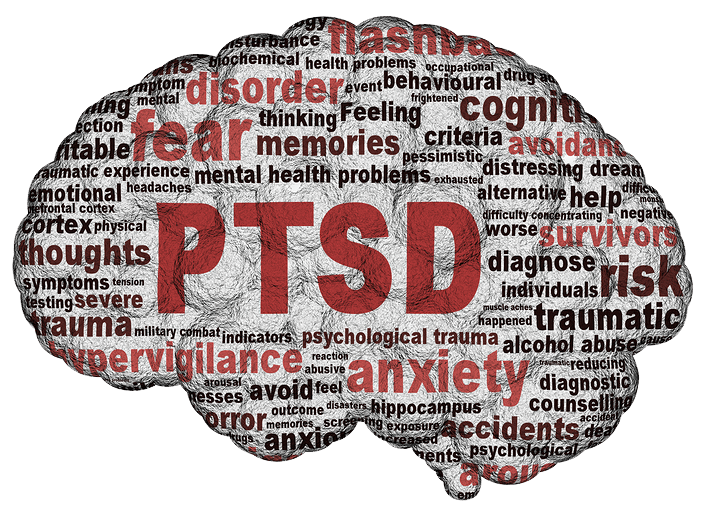
Posttraumatic stress disorder (PTSD), once called shell shock or battle fatigue syndrome, is a serious condition that can develop after a person has experienced or witnessed a traumatic or terrifying event in which serious physical harm occurred or was threatened. PTSD is a lasting consequence of traumatic ordeals that cause intense fear, helplessness, or horror, such as a sexual or physical assault, the unexpected death of a loved one, an accident, war, or natural disaster. Families of victims can also develop PTSD, as can emergency personnel and rescue workers.

Most people who experience a traumatic event will have reactions that may include shock, anger, nervousness, fear, and even guilt. These reactions are common, and for most people, they go away over time. For a person with PTSD, however, these feelings continue and even increase, becoming so strong that they keep the person from living a normal life. People with PTSD have symptoms for longer than one month and cannot function as well as before the event occurred.

What Are the Symptoms of PTSD?

Symptoms of PTSD most often begin within three months of the event. In some cases, however, they do not begin until years later. The severity and duration of the illness vary. Some people recover within six months, while others suffer much longer.

Symptoms of PTSD often are grouped into four main categories, including:

• Reliving: People with PTSD repeatedly relive the ordeal through thoughts and memories of the trauma. These may include flashbacks, hallucinations, and nightmares. They also may feel great distress when certain things remind them of the trauma, such as the anniversary date of the event.

• Avoiding: The person may avoid people, places, thoughts, or situations that may remind him or her of the trauma. This can lead to feelings of detachment and isolation from family and friends, as well as a loss of interest in activities that the person once enjoyed.

• Increased arousal: These include excessive emotions; problems relating to others, including feeling or showing affection; difficulty falling or staying asleep; irritability; outbursts of anger; difficulty concentrating; and being “jumpy” or easily startled. The person may also suffer physical symptoms, such as increased blood pressure and heart rate, rapid breathing, muscle tension, nausea, and diarrhea.

• Negative Cognitions and Mood: This refers to thoughts and feelings related to blame, estrangement, and memories of the traumatic event.

Young children with PTSD may suffer from delayed development in areas such as toilet training, motor skills, and language.

Who Gets PTSD?

Everyone reacts to traumatic events differently. Each person is unique in his or her ability to manage fear and stress and to cope with the threat posed by a traumatic event or situation. For that reason, not everyone who experiences or witnesses a trauma will develop PTSD. Further, the type of help and support a person receives from friends, family members and professionals following the trauma may influence the development of PTSD or the severity of symptoms.

PTSD was first brought to the attention of the medical community by war veterans; hence the names shell shock and battle fatigue syndrome. However, PTSD can occur in anyone who has experienced a traumatic event that threatens death or violence. People who have been abused as children or who have been repeatedly exposed to life-threatening situations are at greater risk for developing PTSD. Victims of trauma related to physical and sexual assault face the greatest risk for PTSD.

How Common Is PTSD?

About 3.6% of adult Americans — about 5.2 million people — suffer from PTSD during the course of a year, and an estimated 7.8 million Americans will experience PTSD at some point in their lives. PTSD can develop at any age, including childhood. Women are more likely to develop PTSD than are men. This may be due to the fact that women are more likely to be victims of domestic violence, abuse, and rape.

How Is PTSD Diagnosed?

PTSD is not diagnosed until at least one month has passed since the time a traumatic event has occurred. If symptoms of PTSD are present, the doctor will begin an evaluation by performing a complete medical history and physical exam. Although there are no lab tests to specifically diagnose PTSD, the doctor may use various tests to rule out physical illness as the cause of the symptoms.

If no physical illness is found, you may be referred to a psychiatrist, psychologist, or other mental health professional who is specially trained to diagnose and treat mental illnesses. Psychiatrists and psychologists use specially designed interview and assessment tools to evaluate a person for the presence of PTSD or other psychiatric conditions. The doctor bases his or her diagnosis of PTSD on reported symptoms, including any problems with functioning caused by the symptoms. The doctor then determines if the symptoms and degree of dysfunction indicate PTSD. PTSD is diagnosed if the person has symptoms of PTSD that last for more than one month.

How Is PTSD Treated?

The goal of PTSD treatment is to reduce the emotional and physical symptoms, to improve daily functioning, and to help the person better cope with the event that triggered the disorder. Treatment for PTSD may involve psychotherapy (a type of counseling), medication, or both.

Medication

Doctors use certain antidepressant medications to treat PTSD — and to control the feelings of anxiety and its associated symptoms — including selective serotonin reuptake inhibitors (SSRIs) such as Paxil, Celexa, Luvox, Prozac, and Zoloft; and tricyclic antidepressants such as Elavil and Doxepin. Mood stabilizers such as Depakote and Lamictal and atypical antipsychotics such as Seroquel and Abilify are sometimes used. Certain blood pressure medicines are also sometimes used to control particular symptoms. For example prazosin may be used for nightmares, or propranolol may be used to help minimize the formation of traumatic memories. “Experts discourage the use of tranquilizers such as Ativan or Klonopin for PTSD because studies have not shown them to be helpful, plus they carry a risk for physical dependence or addiction.

Psychotherapy

Psychotherapy for PTSD involves helping the person learn skills to manage symptoms and develop ways of coping. Therapy also aims to teach the person and his or her family about the disorder, and help the person work through the fears associated with the traumatic event. A variety of psychotherapy approaches are used to treat people with PTSD, including:

• Cognitive behavioral therapy, which involves learning to recognize and change thought patterns that lead to troublesome emotions, feelings, and behavior.

• Prolonged exposure therapy, a type of behavioral therapy that involves having the person re-live the traumatic experience, or exposing the person to objects or situations that cause anxiety. This is done in a well-controlled and safe environment. Prolonged exposure therapy helps the person confront the fear and gradually become more comfortable with situations that are frightening and cause anxiety. This has been very successful at treating PTSD.

• Psychodynamic therapy focuses on helping the person examine personal values and the emotional conflicts caused by the traumatic event.

• Family therapy may be useful because the behavior of the person with PTSD can have an affect on other family members.

• Group therapy may be helpful by allowing the person to share thoughts, fears, and feelings with other people who have experienced traumatic events.

• Eye Movement Desensitization and Reprocessing (EMDR) is a complex form of psychotherapy that was initially designed to alleviate distress associated with traumatic memories and is now also used to treat phobias.

What Is the Outlook for People With PTSD?

Recovery from PTSD is a gradual and ongoing process. Symptoms of PTSD seldom disappear completely, but treatment can help sufferers learn to cope more effectively. Treatment can lead to fewer and less intense symptoms, as well as a greater ability to cope by managing feelings related to the trauma.

Research is ongoing into the factors that lead to PTSD and into finding new treatments.

Can PTSD Be Prevented?

Some studies suggest that early intervention with people who have suffered a trauma may reduce some of the symptoms of PTSD or prevent it all together.

Sources:

Webmd

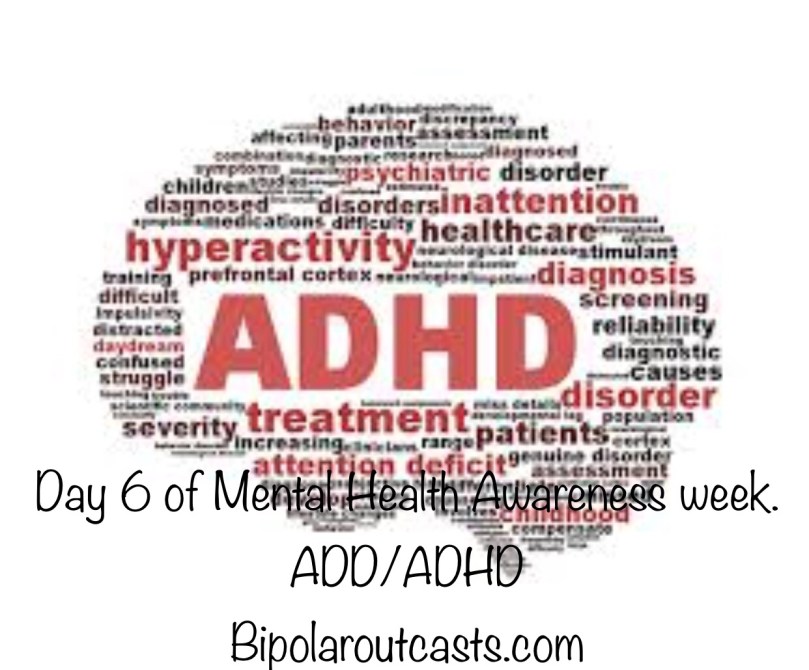
🖤Day 6 🖤 ADD/ADHD

Each day I will detail an illness. Some of them you’ve heard of some you haven’t but the most important thing is we recognize some of them. One illness is greater than the other just some for more information.

PSA:

*ADD AND ADHD ARE REAL! IT ISN’T FROM BAD PARENTING OR LAZINESS. IT IS A REAL DISEASE PEOPLE SUFFER WITH EVERYDAY.*

ADD/ADHD

What’s the Difference Between ADD and ADHD?

eople with ADHD are boisterous, outspoken, and physically active, right? Wrong. Many people with ADHD — especially girls and women — live with a quiet, spacey form of the condition that’s often misunderstood and undiagnosed. While the condition can be impossible to ignore in hyperactive children, adults who have trouble listening or are always late can be seen as rude or disorganized. Their ADHD symptoms are never identified or treated because people don’t understand the difference between ADD vs. ADHD — or, more precisely, between the 3 types of ADHD: Primarily Inattentive, Primarily Hyperactive-Impulsive, or Combined.

What is ADHD?

Attention deficit hyperactivity disorder (ADHD) is the preferred medical term for the biologically-based neurological condition that was once called ADD. It’s symptoms fall into with one of three quantifying types: Primarily Inattentive, Primarily Hyperactive-Impulsive, or Combined. They also vary in severity from person to person, making diagnosis challenging. The group of behaviors that make up ADHD have been recognized since 1902, though the name has changed over time. According the the Centers for Disease Control and Prevention, 11% of children and teens in the United States have been diagnosed with ADHD.

What Is the Meaning of ADD vs. ADHD?

ADHD is the official, medical term for the condition — regardless of whether a patient demonstrates symptoms of hyperactivity. ADD is a now-outdated term that is typically used to describe inattentive-type ADHD, which has symptoms including disorganization, lack of focus, and forgetfulness. People with inattentive ADHD are not hyper or impulsive.

What Is Inattentive ADHD?

Inattentive ADHD is often written off as spacey, apathetic behavior in children, or mood disorders/anxiety in adults. People with this form of ADHD often lose focus, are forgetful, and seem to have trouble listening. According to the Diagnostic and Statistical Manual of Mental Disorders-V (DSM-V), six of the following symptoms must be present and causing a severe impact at school or work to merit a diagnosis.

• Often fails to give close attention to details or makes careless mistakes

• Often has difficulty sustaining attention

• Often does not seem to listen when spoken to

• Often does not follow through on instructions and fails to finish projects

• Often has difficulty organizing tasks and activities

• Often avoids, dislikes, or is reluctant to engage in tasks that require sustained mental effort

• Often loses things necessary for tasks or activities

• Is often easily distracted by extraneous stimuli

• Is often forgetful in daily activities

Recognizing inattentive ADHD is key to preventing a lifetime of low self esteem and shame.

What Is Hyperactive-Impulsive ADHD?

yperactive-impulsive type is the stereotype most people imagine when they think of ADHD: a young boy, bouncing off the walls, and interrupting the teacher mid sentence. Yet, this description fits only a small portion of those with the condition. To have this type, a person must have 6 or more of the following symptoms:

• Fidgets with hands or feet or squirms in seat.

• Leaves seat in classroom or in other situations in which remaining seated is expected.

• Runs about or climbs excessively in situations in which it is inappropriate (in adolescents or adults, may be limited to subjective feelings of restlessness).

• Has difficulty playing or engaging in leisure activities quietly.

• Appears “on the go” or acts as if “driven by a motor.”

• Talks excessively.

• Blurts out the answers before the questions have been completed.

• Has difficulty awaiting turn.

• Interrupts or intrudes on others (e.g., butts into conversations or games).

What Is Combined Type ADHD?

Combined type ADHD occurs when someone has 6 or more symptoms of inattention, and 6 or more symptoms of hyperactivity and impulsivity. Men and boys more commonly have hyperactive symptoms, while women and girls more commonly have inattentive. Because of this, men are more commonly diagnosed than women, as their symptoms are more easily recognizable as ADHD.

What Does ADHD Look Like In Adults?

eople with inattentive ADHD may make careless mistakes, lose interest quickly, and struggle to follow verbal instructions. They can come off as lazy, disinterested, or forgetful, and they may live with these false, hurtful labels well into their adult life before seeking a diagnosis. We hear many stories of adults who grew up feeling defective or unworthy, never suspecting they had ADHD until their child was diagnosed and they recognized the symptoms in themselves. To avoid the continued epidemic of missed diagnoses, it’s important for medical professionals to recognize all types of ADHD, as well as related conditions often mistaken for ADHD.

SOURCES:

ADDITUDE

Mood swing whirlwind: Fake it until you make it.

Fake it until you make it with your moods right? If you talk to me you could never tell how miserable I actually am and I don’t know if that is a perk or not. I guess it just depends on what day it is. When people tell you. “Oh my gosh you are bipolar I can’t tell.” It is annoying because you can’t look at someone and tell if they are bipolar and we don’t wear a big sign that says, “Hey I’m bipolar judge me.” It’s easier to joke or talk to someone else about their problems then try to get into the complex version that is mine. I had an anxiety attack around 1:00 pm. I had to message someone that I was locked in a handicap bathroom stall but I’m okay so don’t call 911. I hate when they call 911 every time I have a panic/anxiety attack. I’m learning to do it without meds but it is frustrating and it makes me more anxious so basically everything just keeps getting worse. It took me a little more than an hour to calm down enough to leave the bathroom. I’m still coming down from it. When you take a pill it ends fairly quickly but not without meds. I took a Benadryl (it doesn’t help) but I braved a face for the rest of the afternoon and fell apart when I got in my car. When I told someone that was with me what happened they didn’t know what to say, no one ever knows what to say besides you’ve been in a good mood all day. I don’t know how to explain it to people. So I just fake it until I make it or completely fall apart. We’ll see which one comes first.

🖤Day 12🖤 If I won the lottery

That sounds so nice if I won the lottery. I think of all that money but when I become a famous author (because it will happen dammit) what I would do with the money. (Definitely not do a Scrooge McDuck into the money because as family guy taught us it won’t work.) I am not a materialistic person so this probably won’t be very interesting. I wouldn’t buy houses and cars.

🖤Do a happy dance probably nekkid with money/check/ticket around the house.

🖤Start my own foundation for mental health that provides none profit care for people who can’t afford proper care and the homeless that need medication. Good low cost to free services so people can get the treatment they deserve because all of us deserve a chance for treatment. I am currently working on starting a non profit now.

🖤Donate to my church- This crazy progressive Baptist loves her church. I am 4th generation at my church my daughter a 5th generation and they’ve been a HUGE SUPPORT system throughout everything we’ve been through with no judgment and all the help in the world. We aren’t one of those big fancy churches just an old small baptist church. The church needs some work and I would love to be able to help them.

🖤 My husband and daughter- My husband has sacrificed so much for his family. This year was the first time in over 11 years he got a truck with working AC, less than 200,000 (it only has 70,000) and all of the different parts work. We aren’t rich people but something this simple for him has made his business and life so much easier. (He owns his on detail business) He worked 2 jobs when I lost mine working more than 90 hours in a week sometimes. He’s paid for me to be a stay at home mom for awhile and for me to have a good car. He’s always made sure I had a newer car with low miles and was good and reliable so I can go back and forth and he knows that I and our daughter are safe. I would take what I needed from the money and give the rest to him and our daughter.

🖤 My close friends- The friends who are closest to me the ones I can call and text at anytime the ones who would drop anything for me. I would give them whatever they want. I know that I’m difficult to deal with but they’ve always taken care of me so I would take care of them.

🖤My editor- He isn’t my final editor but he’s helped get this book going and tried to keep me on a schedule. (It doesn’t work) He’s put so much time in the book and that’s time away from his beautiful family. I know they are very humble and simple people and probably wouldn’t take it but I would give them everything I could.

This is why me winning the lottery isn’t interesting. I wouldn’t go splurge on anything (maybe a couple of Macs) but that’s it. That’s why people like me don’t win the lottery. I’m not a greedy or materialistic.

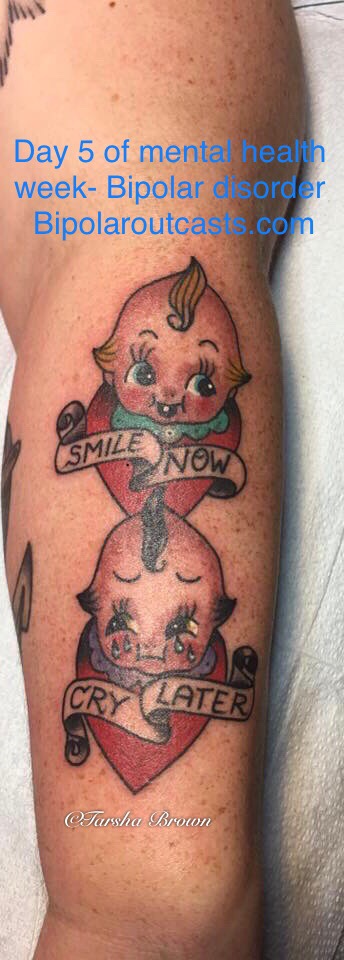
🖤Day 5🖤 Mental Health Week- Bipolar Disorder

Each day I will detail an illness. Some of them you’ve heard of some you haven’t but the most important thing is we recognize some of them. One illness is greater than the other just some for more information.

Bipolar Disorder Overview

Bipolar disorder, with its extreme mood swings from depression to mania, used to be called manic depressive disorder. Bipolar disorder is very serious and can cause risky behavior, even suicidal tendencies, and can be treated with therapy and medication.

Bipolar Disorder

Bipolar disorder, also known as manic depression, is a mental illness that brings severe high and low moods and changes in sleep, energy, thinking, and behavior.

People who have bipolar disorder can have periods in which they feel overly happy and energized and other periods of feeling very sad, hopeless, and sluggish. In between those periods, they usually feel normal. You can think of the highs and the lows as two “poles” of mood, which is why it’s called “bipolar” disorder.

What Causes Bipolar Disorder?

There is no single cause. Genes, brain changes, and stress can all play a role.

Researchers are studying how these factors may contribute to the development of bipolar disorder.

How Is Bipolar Disorder Diagnosed?

If you or someone you know has symptoms of bipolar disorder, talk to your family doctor or a psychiatrist. They will ask questions about mental illnesses that you, or the person you’re concerned about, have had, and any mental illnesses that run in the family. The person will also get a complete psychiatric evaluation to tell if they have likely bipolar disorder or another mental health condition.”

Diagnosing bipolar disorder is all about the person’s symptoms and determining whether they may be the result of another cause (such as low thyroid, or mood symptoms caused by drug or alcohol abuse). How severe are they? How long have they lasted? How often do they happen?

The most telling symptoms are those that involve highs or lows in mood, along with changes in sleep, energy, thinking, and behavior.

Talking to close friends and family of the person can often help the doctor distinguish bipolar disorder from major depressive (unipolar) disorder or other psychiatric disorders that can involve changes in mood, thinking, and behavior.

Bipolar Disorder and Suicide

Some people who have bipolar disorder may become suicidal.

Learn the warning signs and seek immediate medical help for them:

• Depression (changes in eating, sleeping, activities)

• Isolating yourself

• Talking about suicide, hopelessness, or helplessness

• Acting recklessly

• Taking more risks

• Having more accidents

• Abusing alcohol or other drugs

• Focusing on morbid and negative themes

• Talking about death and dying

• Crying more, or becoming less emotionally expressive

• Giving away possessions

🖤Day 11 🖤 Proudest moment

There are a lot of these though I think that everyone should list the things they are proud of especially if they are going on spiral it helps to not you aren’t a complete fuck up.

1.) Hands down my daughter. She is my proudest moment having her was the best day of my life and I don’t know if I would still be here without her.

2.) My book- It’s been a 6 year process and we are finally getting somewhere with it and it may get published soon

3.) Sobriety- It is an easier thought then action. In NA/AA they tell you your first step is to admit you have a problem and that is supposed to be the hardest but it is the second and third step is the worst. I’ve making my way through slowly. I’m so proud of myself for making this decision.

4.) Surviving- Suicide survival in itself is a gift and a burden. Our gift is still being here but it’s a burden still being here. It is so confusing and heartbreaking. The best thing I could ever do is survive.

5.) This blog- I’ve said for years I was going to do this but I never figured people would actually read anything I had to say but this is taking off.

-Raw emotions with my moods.

!!!!Trigger warning!!!

For the first time since everything happened my moods have changed. They are rapidly declining and all I can think of is how much I want Xanax. It drives me crazy when people tell you that they want to know things are getting bad then think you are whining. Fuck people either you want me to tell you or you don’t but if you say I am whining then I am going to stop telling you. I just think people in general suck 99.256532% of the time.

The problem with my illness is sometimes I don’t know if up is down or down is up and that is where I am at right now. I haven’t really ate much lately it is a hassle. I haven’t brushed my teeth so everything I drink hurts. (I have extremely sensitive teeth.) so I know I am dehydrated. I am tired and not sleeping doesn’t help anything. I keep having horrible dreams that cause anxiety attacks but I can’t have benzos and nothing else works (trust me when I tell you this) not even “breathing” therapy or any other bullshit a therapist works and again I want Xanax. I want that high so bad and I can’t have it and dealing with my shit when it starts to get real is hard and I know I should have a therapist but it isn’t my thing. (a different story) I am not suicidal as of now and I’m hoping I can get it together before we crawl down that rabbit hole again. I am praying that taking my meds like I am supposed to will stop that problem but somehow I doubt it. I don’t like being able to feel these things it is too overwhelming and I just want them to go away. I am off my schedule (my life requires structure and routine to avoid chaos.) which definitely isn’t helping anything. I can put all the pieces together of what is happening around me and I see things…..I just can’t fix it. I don’t know how or if I would make anything better or if it would just get worse. I know once I start going into details with friends and family the worrying starts. I am worried for me too, if I really want Xanax or pain killers I can put my hands on them with no problem but it is not doing it that is so hard. I’ve never actually dealt with everything in 5 years so I probably need a therapist to work through this. I started posting some of my photography on Instagram and it seems to be a hit. I’m trying whatever outlet I have that is healthy right now.

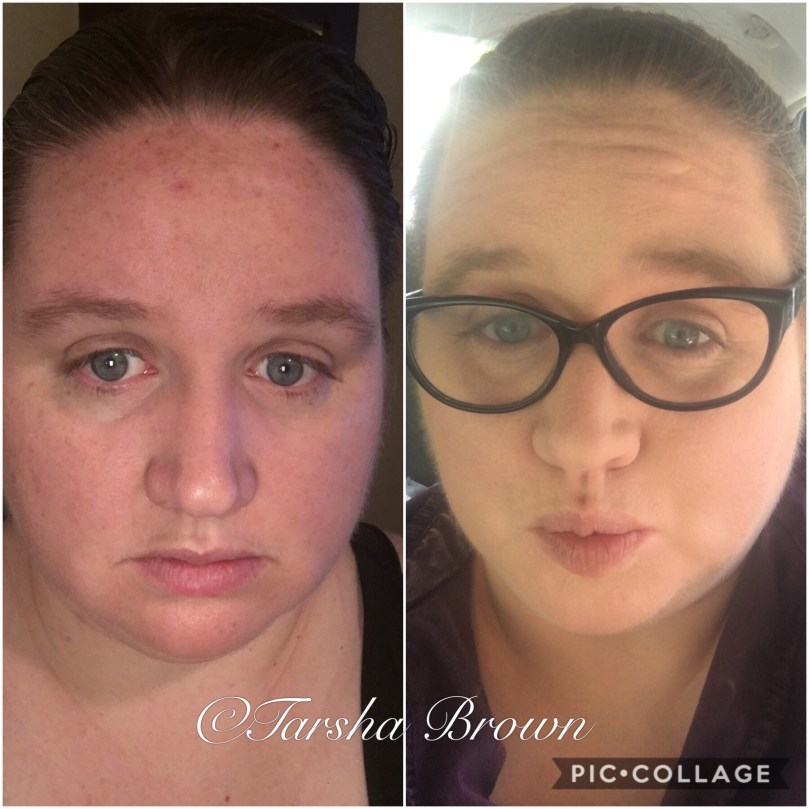
I tried to put on makeup on, it used to help pep me up but it didn’t work. I put on too much setting powder my foundation wouldn’t blend properly neither would my eyeshadow. I felt worse after putting it on. I looked like a puffy orange clown. My emotions are so raw they hurt and I can’t numb it and it is so raw that it is almost unbearable. We forget sometimes that through the memes, quotes that we desensitize our illness. We need to be more open about how much it hurts to be like this. I will update my progress through this as sober as possible.

🖤