Each day I will detail an illness. Some of them you’ve heard of some you haven’t but the most important thing is we recognize some of them. One illness is greater than the other just some for more information.
Dissociative identity disorder (previously known as multiple personality disorder) is thought to be a complex psychological condition that is likely caused by many factors, including severe trauma during early childhood (usually extreme, repetitive physical, sexual, or emotional abuse).
What Is Dissociative Identity Disorder?
Most of us have experienced mild dissociation, which is like daydreaming or getting lost in the moment while working on a project. However, dissociative identity disorder is a severe form of dissociation, a mental process which produces a lack of connection in a person’s thoughts, memories, feelings, actions, or sense of identity. Dissociative identity disorder is thought to stem from a combination of factors that may include trauma experienced by the person with the disorder. The dissociative aspect is thought to be a coping mechanism — the person literally dissociates himself from a situation or experience that’s too violent, traumatic, or painful to assimilate with his conscious self.
Is Dissociative Identity Disorder Real?
You may wonder if dissociative identity disorder is real. After all, understanding the development of multiple personalities is difficult, even for highly trained experts. The diagnosis itself remains controversial among mental health professionals, with some experts believing that it is really an “offshoot” phenomenon of another psychiatric problem, such as borderline personality disorder, or the product of profound difficulties in coping abilities or stresses related to how people form trusting emotional relationships with others.
Other types of dissociative disorders defined in the DSM-5, the main psychiatry manual used to classify mental illnesses, include dissociative amnesia (with “dissociative fugue” now being regarded as a subtype of dissociative amnesia rather than its own diagnosis), and depersonalization/derealization disorder.
What Are the Symptoms of Dissociative Identity Disorder?
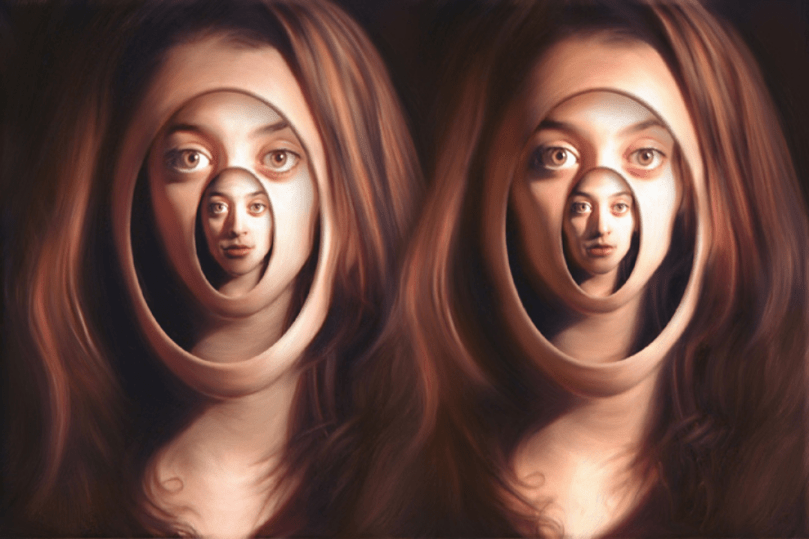
Dissociative identity disorder is characterized by the presence of two or more distinct or split identities or personality states that continually have power over the person’s behavior. With dissociative identity disorder, there’s also an inability to recall key personal information that is too far-reaching to be explained as mere forgetfulness. With dissociative identity disorder, there are also highly distinct memory variations, which fluctuate with the person’s split personality.
The “alters” or different identities have their own age, sex, or race. Each has his or her own postures, gestures, and distinct way of talking. Sometimes the alters are imaginary people; sometimes they are animals. As each personality reveals itself and controls the individuals’ behavior and thoughts, it’s called “switching.” Switching can take seconds to minutes to days. When under hypnosis, the person’s different “alters” or identities may be very responsive to the therapist’s requests.
Along with the dissociation and multiple or split personalities, people with dissociative disorders may experience a number of other psychiatric problems, including symptoms:
• Depression
• Mood swings
• Suicidal tendencies
• Sleep disorders (insomnia, night terrors, and sleep walking)
• Anxiety, panic attacks, and phobias (flashbacks, reactions to stimuli or “triggers”)
• Alcohol and drug abuse
• Compulsions and rituals
• Psychotic-like symptoms (including auditory and visual hallucinations)
• Eating disorders
Other symptoms of dissociative identity disorder may include headache, amnesia, time loss, trances, and “out of body experiences.” Some people with dissociative disorders have a tendency toward self-persecution, self-sabotage, and even violence (both self-inflicted and outwardly directed). As an example, someone with dissociative identity disorder may find themselves doing things they wouldn’t normally do, such as speeding, reckless driving, or stealing money from their employer or friend, yet they feel they are being compelled to do it. Some describe this feeling as being a passenger in their body rather than the driver. In other words, they truly believe they have no choice.
What’s the Difference Between Dissociative Identity Disorder and Schizophrenia?
Schizophrenia and dissociative identity disorder are often confused, but they are very different.
Schizophrenia is a severe mental illness involving chronic (or recurrent) psychosis, characterized mainly by hearing or seeing things that aren’t real (hallucinations) and thinking or believing things with no basis in reality (delusions). Contrary to popular misconceptions, people with schizophrenia do not have multiple personalities. Delusions are the most common psychotic symptom in schizophrenia; hallucinations, particularly hearing voices, are apparent in about half to three quarters of people with the illness.
Suicide is a risk with both schizophrenia and dissociative identity disorder, although patients with multiple personalities have a history of suicide attempts more often than other psychiatric patients.
How Does Dissociation Change the Way a Person Experiences Life?
There are several main ways in which the psychological processes of dissociative identity disorder change the way a person experiences living, including the following:
• Depersonalization. This is a sense of being detached from one’s body and is often referred to as an “out-of-body” experience.
• Derealization. This is the feeling that the world is not real or looking foggy or far away.
• Amnesia. This is the failure to recall significant personal information that is so extensive it cannot be blamed on ordinary forgetfulness. There can also be micro-amnesias where the discussion engaged in is not remembered, or the content of a meaningful conversation is forgotten from one second to the next.
• Identity confusion or identity alteration. Both of these involve a sense of confusion about who a person is. An example of identity confusion is when a person has trouble defining the things that interest them in life, or their political or religious or social viewpoints, or their sexual orientation, or their professional ambitions. In addition to these apparent alterations, the person may experience distortions in time, place, and situation.
It is now acknowledged that these dissociated states are not fully mature personalities, but rather they represent a disjointed sense of identity. With the amnesia typically associated with dissociative identity disorder, different identity states remember different aspects of autobiographical information. There is usually a “host” personality within the individual, who identifies with the person’s real name. Ironically, the host personality is usually unaware of the presence of other personalities.
What Roles Do the Different Personalities Play?
The distinct personalities may serve diverse roles in helping the individual cope with life’s dilemmas. For instance, there’s an average of two to four personalities present when the patient is initially diagnosed. Then there’s an average of 13 to 15 personalities that can become known over the course of treatment. While unusual, there have been instances of dissociative identity disorder with more than 100 personalities. Environmental triggers or life events cause a sudden shift from one alter or personality to another.
Who Gets Dissociative Identity Disorder?
While the causes of dissociative identity disorder are still vague, research indicates that it is likely a psychological response to interpersonal and environmental stresses, particularly during early childhood years when emotional neglect or abuse may interfere with personality development. As many as 99% of individuals who develop dissociative disorders have recognized personal histories of recurring, overpowering, and often life-threatening disturbances at a sensitive developmental stage of childhood (usually before age 9). Dissociation may also happen when there has been persistent neglect or emotional abuse, even when there has been no overt physical or sexual abuse. Findings show that in families where parents are frightening and unpredictable, the children may become dissociative.
How Is Dissociative Identity Disorder Diagnosed?
Making the diagnosis of dissociative identity disorder takes time. It’s estimated that individuals with dissociative disorders have spent seven years in the mental health system prior to accurate diagnosis. This is common, because the list of symptoms that cause a person with a dissociative disorder to seek treatment is very similar to those of many other psychiatric diagnoses. In fact, many people who have dissociative disorders also have coexisting diagnoses of borderline or other personality disorders, depression, and anxiety.
The DSM-5 provides the following criteria to diagnose dissociative identity disorder:
1 Two or more distinct identities or personality states are present, each with its own relatively enduring pattern of perceiving, relating to, and thinking about the environment and self.
2 Amnesia must occur, defined as gaps in the recall of everyday events, important personal information, and/or traumatic events.
3 The person must be distressed by the disorder or have trouble functioning in one or more major life areas because of the disorder.
4 The disturbance is not part of normal cultural or religious practices.
5 The symptoms can not be due to the direct physiological effects of a substance (such as blackouts or chaotic behavior during alcohol intoxication) or a general medical condition (such as complex partial seizures).
Are There Famous People With Dissociative Identity Disorder?
Famous people with dissociative identity disorder include retired NFL star Herschel Walker, who says he’s struggled with dissociative identity disorder for years but has only been treated for the past eight years.
Walker recently published a book about his struggles with dissociative identity disorder, along with his suicide attempts. Walker talks about a feeling of disconnect from childhood to the professional leagues. To cope, he developed a tough personality that didn’t feel loneliness, one that was fearless and wanted to act out the anger he always suppressed. These “alters” could withstand the abuse he felt; other alters came to help him rise to national fame. Today, Walker realizes that these alternate personalities are part of dissociative identity disorder, which he was diagnosed with in adulthood.
How Common Is Dissociative Identity Disorder?
Statistics show the rate of dissociative identity disorder is .01% to 1% of the general population. Considering dissociation more broadly, more than a third of people say they feel as if they’re watching themselves in a movie at times (that is, possibly experiencing the phenomenon of dissociation), and 7% percent of the population may have some form of an undiagnosed dissociative disorder.
What’s the Recommended Treatment Plan for Dissociative Identity Disorder?
While there’s no “cure” for dissociative identity disorder, long-term treatment can be helpful, if the patient stays committed. Effective treatment includes talk therapy or psychotherapy, hypnotherapy, and adjunctive therapies such as art or movement therapy. There are no established medication treatments for dissociative identity disorder, making psychologically-based approaches the mainstay of therapy. Treatment of co-occurring disorders, such as depression or substance use disorders, is fundamental to overall improvement.
Because the symptoms of dissociative disorders often occur with other disorders, such as anxiety and depression, medicines to treat those co-occurring problems, if present, are sometimes used in addition to psychotherapy.
Source:
WebMD Medical Reference Reviewed by Joseph Goldberg, MD on May 11, 2018










 ♥ Daisies and Bruises ♥